
TikTok has described two tools aimed at AI-generated content: a control that lets people choose how much of it appears in their For You feed, and an “invisible watermark” meant to keep AI labels attached to videos. This article sets out what TikTok’s own newsroom says about both, what the company has not said, and why the two are linked. It describes TikTok’s global announcements; availability and wording in any one country or app version may differ.
What did TikTok announce?
TikTok’s newsroom post on AI-generated content (AIGC) is dated 19 November 2025 on one version of the page and 24 November 2025 on the UK-language version. Both versions describe the same package of measures:
- a test of an AIGC control inside the existing “Manage topics” feature;
- a test of “invisible watermarking” to strengthen AI labels;
- continued use of C2PA Content Credentials;
- a US$2 million AI literacy fund; and
- deeper involvement in the Partnership on AI, a cross-industry body.
The announcement is more than a year old as of 25 November 2026, according to the dates on those pages. TikTok said the features would arrive “in the coming weeks”, and this article has not found a newer official page confirming that every user now has them, so readers should check their own app settings.
How does the AI content control work?
According to TikTok, Manage topics already lets people adjust how much of their For You feed comes from more than 10 categories, with Dance, Sports and Food & Drinks given as examples. The new setting would add AI-generated content as a further option, so a person can choose to see more or less of it.
TikTok is explicit that this changes proportions rather than banning anything. In the company’s words, the setting adjusts how much content people see; it does not remove content entirely. In practical terms, it is a personalisation preference, much like choosing to see fewer posts about a topic. For background on why such preferences matter, see our explainer on how recommendation algorithms decide what you see.
What is an invisible watermark?
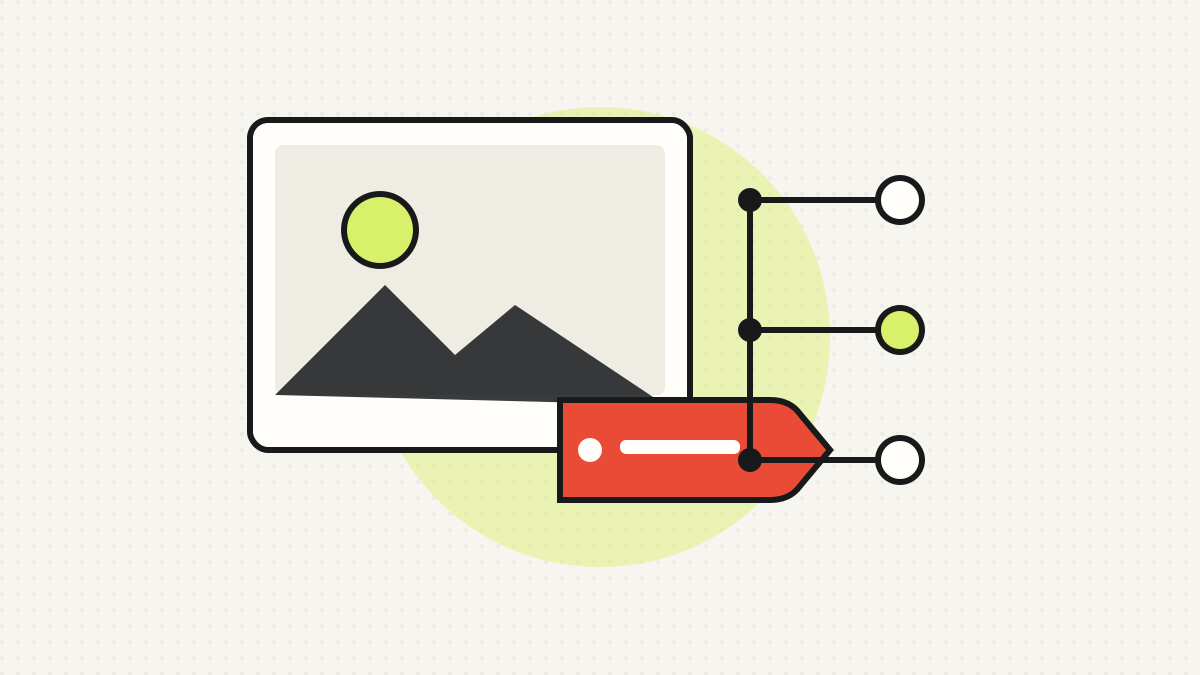
TikTok describes invisible watermarking as an additional layer on top of its labels. The company says it is a robust watermark that only TikTok can read, which is intended to make it harder for others to remove or imitate.
According to TikTok, the watermarks would be added to:
- AI-generated content made with TikTok’s own tools, such as AI Editor Pro; and
- content uploaded to TikTok that already carries C2PA Content Credentials.
The stated aim is to label content more reliably and to give more context about changes made to it. The reason is simple: TikTok says labels can be lost when a video is re-uploaded or edited elsewhere. A mark embedded in the video itself is designed to survive those steps where visible labels and file metadata may not.
Why does that matter if labels already exist? Labels in an app are only as durable as the data behind them. Metadata attached to a file can be stripped when a clip is screen-recorded, compressed, cropped or re-exported. Visible captions or on-screen marks can be cut out. A watermark woven into the picture or audio is a second route to the same answer, “this was made or changed with AI”, that does not depend on the file’s metadata surviving.
This is the article’s own reading of the problem, not a technical claim from TikTok. TikTok’s post does not publish how the watermark works, how often it is detected correctly, or how it copes with heavy editing. Those details matter, and independent testing would be needed to judge them.
What are C2PA Content Credentials?
TikTok calls C2PA Content Credentials a cross-industry technology that embeds metadata into content so that TikTok, and other platforms that use C2PA, can tell when something is AI-generated. TikTok says it will keep reading those credentials and will add them to AI-generated content made on TikTok.
C2PA is also recognised by other platforms. Our guide to how YouTube and Meta label AI-generated content notes that YouTube may apply a label automatically to content containing C2PA metadata, and that Meta says it looks for industry-standard indicators. The practical point for creators is that a credential added by one tool can be read by several services, at least in principle.
How does TikTok decide when to label a video?
TikTok says it requires creators to label realistic AI-generated content, and that it uses three routes to apply labels: creator labelling tools, its own detection models and C2PA. It adds that, over the past year, it has shown more context on whether a label came from AI detection, a creator’s own label, or TikTok’s AI tools.
| Route to a label | What TikTok says |
|---|---|
| Creator label | Creators are required to label realistic AI-generated content |
| Detection models | TikTok’s own systems can identify AI-generated content |
| C2PA Content Credentials | TikTok reads credentials from other tools and adds them to content made on TikTok |
TikTok also says these efforts have helped label over 1.3 billion videos to date, as of its November 2025 post. The company does not say, in the pages read for this article, how many of those labels came from each route, or how many videos were labelled wrongly.
How might the slider and the watermark work together?
TikTok presents the two features as part of one approach, and the link is logical. A control that reduces AI content in a feed needs a dependable way to know which videos are AI-generated. Better labelling is therefore what makes the slider meaningful.
That also means the slider’s effect cannot be better than the detection behind it. Content made with other tools, stripped of credentials and unlabelled by its poster could still reach a feed even where the setting is turned down. This is an inference from how the features are described, not something TikTok has stated.
Creators with original, non-AI work could see an indirect benefit if audiences can separate it from synthetic material. Those who use AI tools may see their videos shown less to people who choose to see less AI. Neither outcome has been measured in the sources used here.
What does the AI literacy fund add?
TikTok says it is launching a US$2 million AI literacy fund. It supports more than 20 experts across more than a dozen markets, with the organisation Girls Who Code named as an example, to make For You feed content about AI literacy and safety.
Illustrative arithmetic: US$2,000,000 divided by 20 experts is US$100,000 each. Because TikTok says “more than 20” experts are involved, an even split would come to less than US$100,000 per expert. TikTok does not say the money is divided evenly or paid per expert, so this is only a sense of scale and not a description of how the fund works.
For readers in the UK, the wider context is media literacy, which Ofcom promotes; our piece on what media literacy is and why Ofcom promotes it explains that background. TikTok’s fund is a company programme and is separate from any UK regulatory requirement.
What should creators and viewers do?
Based on TikTok’s published description, and not as a personal recommendation:
- Creators who publish realistic AI-generated or AI-altered content should expect TikTok to require a label, and should keep tools that attach C2PA Content Credentials switched on where they exist.
- Creators should not assume that a label added elsewhere will persist after re-uploading or editing, which is the problem TikTok says the watermark is meant to address.
- Viewers can look in Manage topics for the AI-generated content option, if it has reached their account, and should remember that it changes proportions rather than removing videos.
- Everyone should treat a label as a signal and not as a judgement on whether a video is accurate or lawful.
Questions about advertising disclosure are separate. For how the UK advertising regulator and the US Federal Trade Commission view synthetic personas in marketing, see our article on AI-generated virtual influencers and the UK and US rules.
What remains unknown about TikTok’s approach?
Several points are not covered by the newsroom post as read:
- how well the invisible watermark survives editing, compression and re-uploading;
- whether the Manage topics control reached all markets, including the UK, and when;
- how accurate TikTok’s detection models are, and what appeals exist for wrongly labelled videos; and
- whether other platforms can read TikTok’s watermark. TikTok describes it as readable only by TikTok.
The final point is a trade-off. A mark that only its maker can read is harder to forge, but it cannot by itself help other services spot the same content. C2PA is the part of TikTok’s approach that is designed to be shared across platforms.
Conclusion: a label is only as strong as its weakest link
TikTok’s announcement ties together a viewer-facing control and a behind-the-scenes marker, and each depends on the other. Based on the company’s own description as of November 2025, the slider changes how much AI content appears but does not remove it, and the watermark is a test intended to keep labels reliable after re-uploads. Independent evidence of how well either works was not part of the sources used, so claims about effectiveness should wait for it.
This article is general information based on TikTok’s published newsroom pages and is not advice. Platform features, availability and policies change, so check the current in-app settings and TikTok’s own pages.
Sources: TikTok Newsroom (More ways to spot, shape and understand AI-generated content, UK English version); TikTok Newsroom (More ways to spot, shape and understand AI content)