
Every few weeks a clip, phrase or photo seems to be everywhere at once. The idea that anyone can engineer such a moment is popular, but the published research is more modest. It shows some patterns in what people share and how spread unfolds, while leaving a lot unexplained. This guide summarises one widely cited study of how online content spreads, explains what it does and does not show, and says what that means for creators and brands.
What does “going viral” actually mean?
In everyday use, “viral” means a lot of people saw something quickly. The word borrows from the way infections spread from person to person, which suggests a chain: one person shares, several friends see it, some of them share it, and so on.
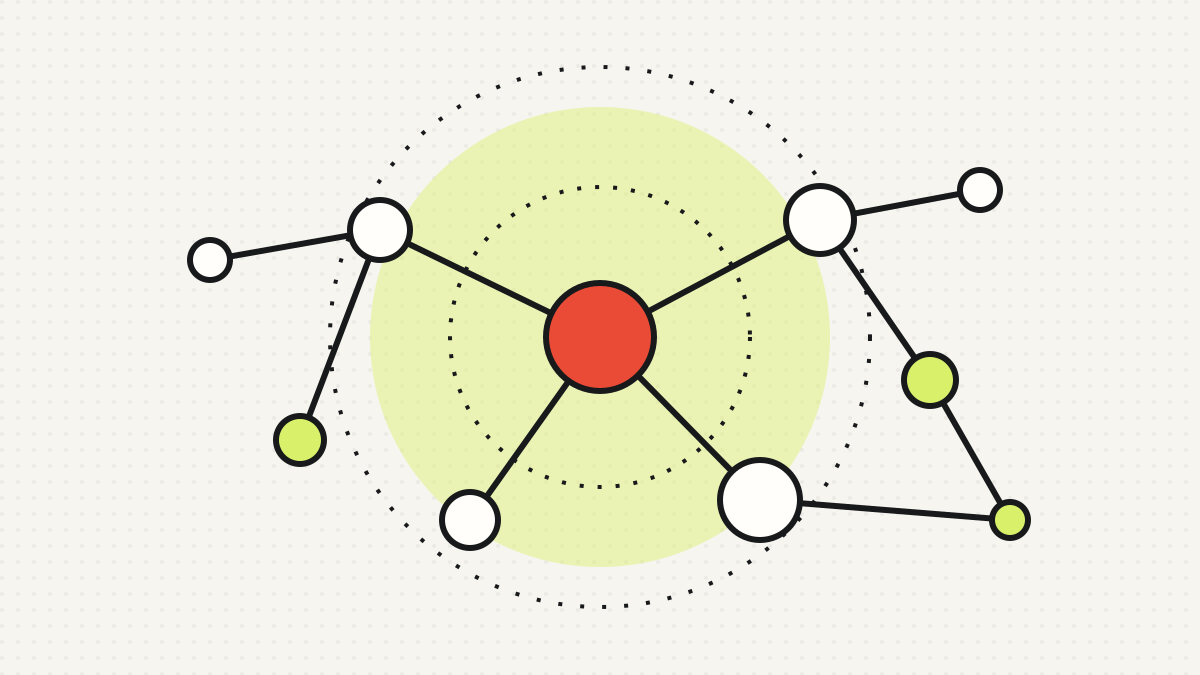
Researchers have found that real online spread can look quite different. Some popular items grow through a chain of many small shares. Others reach huge audiences because one very large account or outlet shared them once. Both feel “viral” to the viewer, but they work differently, and the difference matters for anyone trying to understand a trend.
What does the research say about how spread happens?
In “The Structural Virality of Online Diffusion” (Management Science, January 2016), Sharad Goel, Ashton Anderson, Jake Hofman and Duncan Watts analysed what they describe as a billion diffusion events on Twitter, including news stories, videos, images and petitions. They proposed a measure of “structural virality” that sits between content that becomes popular through a single large broadcast and content that grows through several generations of sharing.
They found surprising structural diversity: popular events grow through broadcast, through viral spread, and through combinations of the two. They also report that structural virality is typically low and stays low regardless of size, which suggests popularity is largely driven by the size of the largest broadcast.
In plain terms, many of the most-seen items did not spread through long chains of friends sharing with friends. They were seen widely because one or a few large sources pushed them out.
Where do platforms’ recommendation systems fit in?
The study describes patterns in sharing. On many platforms today, recommendation systems help decide which items are shown to whom. Our guide to how recommendation algorithms decide what you see summarises what YouTube, Instagram and EU law say publicly about those systems.
That makes the broadcast finding relevant in a new way. When a platform’s own systems, or a large account, put an item in front of many people at once, that works like a big broadcast. The study was not designed to test how modern recommendation feeds behave, so applying it directly would go beyond what it shows.
What can creators and brands realistically do?
The research does not offer a formula, but it supports some modest habits:
- Do not count on a chain reaction. If many popular items reach people through large broadcasts, then reaching a large account or surface can matter more than a perfect message.
- Measure what happened. Platform analytics show where views came from, which helps separate a wide broadcast from slow, steady sharing.
- Be careful about promises. The study does not suggest a reliable way to guarantee a viral result, so a creator who promises one is promising more than the research supports. This matters when brands choose influencers.
How should readers treat claims that something “went viral”?
The word is used loosely, and the research above suggests why caution helps. A few questions make claims easier to judge:
- How was it counted? Views, impressions, shares and unique viewers measure different things.
- Where did the audience come from? One large account sharing a post is not the same as thousands of small shares.
- Over what time? A brief spike and a lasting trend are different.
- What was compared? “Viral” is relative to the account’s usual reach.
Journalists, brands and creators who ask these questions are less likely to repeat a figure that sounds impressive but means little. A claim of virality supported by a clear count and a clear source is worth more than one supported only by adjectives. The same habit helps when a brand is told that a particular creator “always goes viral”: ask for the posts, the counts and the dates, and look at the typical result rather than only the best one.
What are the limits of this research?
Two limits are worth stating plainly. First, the study is older than many of today’s formats. Its data come from Twitter, not from short-form video feeds. Second, it describes patterns across a large sample, not a recipe for any one post.
Other research may qualify or extend this finding, and platforms change their systems often. Readers who want to go further should read the paper itself and look for newer work on the platform they care about.
The takeaway: viral is a pattern, not a plan
The study suggests that popularity often depends on one or a few large broadcasts rather than long chains of sharing. It does not suggest that any creator can reliably produce a viral moment. A realistic aim is to make content people care about, understand where an audience actually comes from and treat a sudden spike as a bonus.
This article summarises published research for general information. Findings apply to the data and periods studied and do not guarantee results on any platform.