Most creators do not earn from one source. They combine payments from platforms, fees from brands, commission on products they recommend and income from things they make and sell themselves. This guide explains each stream in plain terms, what the platforms and regulators say about it, and what to check before building a living on any of them.
What are the main ways creators earn money?
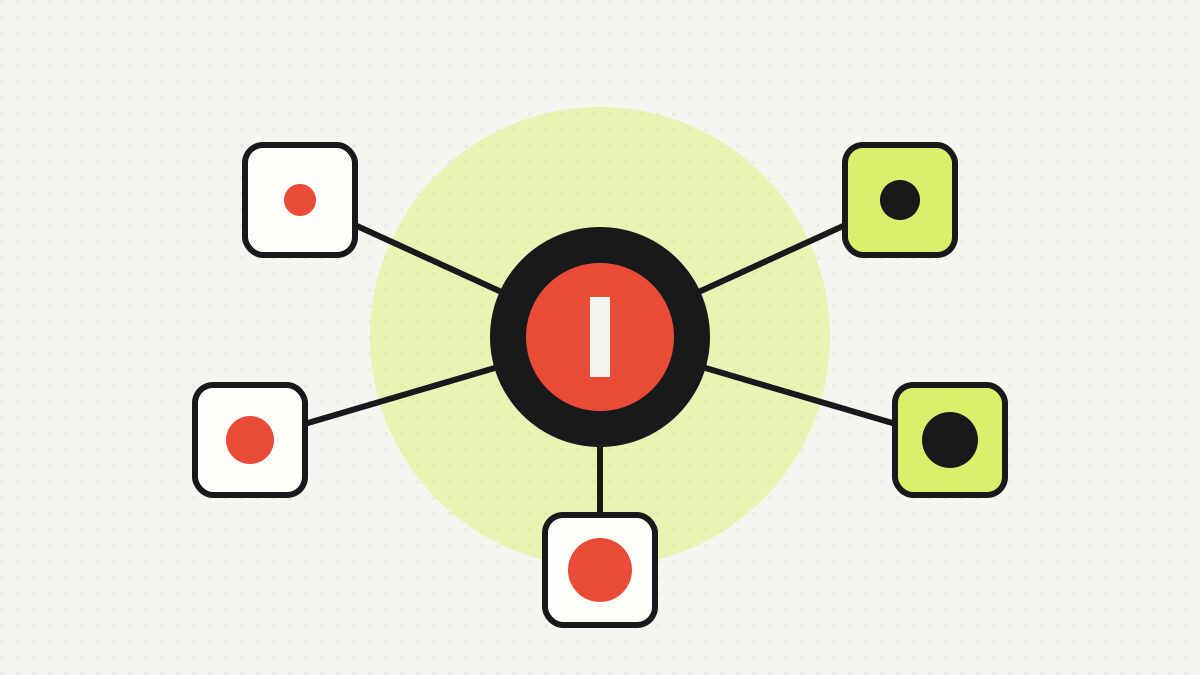
The streams below cover most of what creators do. They differ in who pays, how predictable the money is and how much control the creator has.
| Income stream | How it works | Who pays | Main risk |
|---|---|---|---|
| Platform programmes | Ads, memberships, tips and other features inside a platform | The platform, from advertising and subscriptions | Rules, eligibility and payouts can change |
| Brand partnerships | A brand pays for content or a campaign | The brand | Irregular work; disclosure rules apply |
| Affiliate links | A commission on sales that come through a tracked link | The retailer or brand | Income depends on audience buying behaviour |
| Own products | Merchandise, courses, books, digital goods | The audience | Upfront cost and customer-service duties |
| Licensing and usage rights | A brand pays to reuse a creator’s content | The brand | Contract terms decide what the creator keeps |
| Fan funding | Memberships, subscriptions and direct tips | The audience | Needs a loyal, engaged community |
How do platform programmes pay creators?
Platform programmes are usually the first income a creator meets, and they come with eligibility rules. YouTube’s Help Centre, checked on 12 October 2026, lists several ways to earn once a channel is in the YouTube Partner Program: advertising on the watch page and in the Shorts feed, channel memberships, Super Chat and Super Stickers in live chat, Super Thanks on videos, a share of YouTube Premium revenue and shopping features.
To join the main tier, the same Help Centre says a channel needs 1,000 subscribers plus either 4,000 qualified public watch hours in the last 12 months or 10 million qualified Shorts views in the last 90 days. It also requires compliance with the channel monetisation policies, no active Community Guidelines strikes, 2-Step Verification, a linked AdSense account and residence in a country or region where the programme is available.
Those thresholds are a snapshot, not a promise. Platforms revise them, and other platforms run their own programmes with their own conditions and country lists. The reliable habit is to read the current help page for each programme before planning around it.
How do brand partnerships work as income?
A brand partnership is a paid agreement to make or feature content. Fees are negotiated, so income can be large in one month and absent in the next. Our guide to how to pitch a brand partnership covers how creators approach brands, and how creators set rates explains how to think about pricing.
Platforms now run their own matchmaking tools. Meta said in a February 2024 announcement that Instagram’s creator marketplace lets brands search and filter creators, view portfolios and send project details, while creators build a portfolio and receive offers in a dedicated folder. YouTube said in March 2026 that Creator Partnerships, formerly BrandConnect, is built into YouTube Studio for members of the Partner Program and lets creators choose to share channel insights with advertisers. Availability differs by country, so these tools are one route among several, not a replacement for direct relationships.
Paid content also carries legal duties. A creator who is paid, or receives a free product, generally has to make that clear to the audience. The rules differ between the UK, the US and the EU, and our explainer on influencer disclosure rules sets them out.
What about affiliate links, products and licensing?
Affiliate income pays a commission when someone buys through a link or code. Regulators treat it as commercial content. The UK Advertising Standards Authority says that when influencers include affiliate links or codes, content referring to the product counts as advertising, so it has to be labelled clearly. Comparison content, such as videos about cheaper alternatives to well-known products, is a common home for affiliate links; our explainer on dupe culture covers the brand and design questions it can raise.
Selling your own products shifts the model: a creator keeps the margin but takes on production, stock, refunds and customer service. The UK Competition and Markets Authority’s guidance for creators also covers promoting your own brand, so own-product posts are not exempt from honest labelling.
Licensing is the least visible stream. A brand may pay to reuse a creator’s photos or videos in its own advertising. What the brand may do, for how long and in which countries is set by the contract, which is why creator contracts deserve a careful read.
What does each stream demand from the creator?
Income is never free of work, and each stream asks for a different mix of effort. Platform programmes reward steady publishing and a channel that stays within the rules. Brand work rewards relationship-building, clear communication and reliability under deadlines. Affiliate income rewards trust, because an audience that doubts a recommendation will not buy. Selling products needs operations: stock, delivery, refunds and customer service. Licensing needs careful records of what has been agreed and with whom.
That mix matters when choosing where to start. A creator who enjoys making content but dislikes administration may do better with platform and fan funding first, adding brand work once the paperwork feels manageable. A creator with a loyal niche audience may find products or memberships more natural than advertising. There is no best order; the right sequence is the one the creator can sustain.
Why do most creators combine several streams?
This is analysis rather than a statistic: each stream depends on a different party, so relying on one means relying on that party’s decisions. A platform can change its payout rules, a brand can cancel a campaign and an audience can lose interest. Spreading income across streams reduces how much any single change can hurt, at the cost of more admin and more skills to maintain.
The streams also feed each other. A larger, more engaged audience makes brand deals and fan funding easier to win, while a recognisable product can make a creator more attractive to brands.
What should a new creator check before relying on any stream?
A short checklist helps before any income is treated as dependable:
- Read the current eligibility page for each platform programme and note the country list.
- Keep the agreement for every brand deal in writing, including payment dates and what must be disclosed.
- Label paid, gifted and affiliate content as the local rules require, every time.
- Record income by source, because tax treatment differs by stream and by country.
- Avoid depending on a single platform or a single client for most of the income.
The takeaway: income is a portfolio, not a switch
Creator income grows in layers: a platform programme once a channel qualifies, brand work once there is an audience worth paying for, and products or licensing once the creator has something others want. Each layer has rules that change, which is why the sources behind each stream matter as much as the stream itself.
This article is general information, not financial, tax or legal advice. Eligibility rules and laws change and differ by country; check current official guidance.
Sources: YouTube Help Centre (YouTube Partner Program overview and eligibility, checked 12 October 2026); Meta newsroom (Instagram creator marketplace, February 2024); YouTube Blog (Creator Partnerships, March 2026); Advertising Standards Authority (influencer advertising guidance, 6 August 2026); UK Competition and Markets Authority (social media endorsements guidance, updated 3 September 2025)