
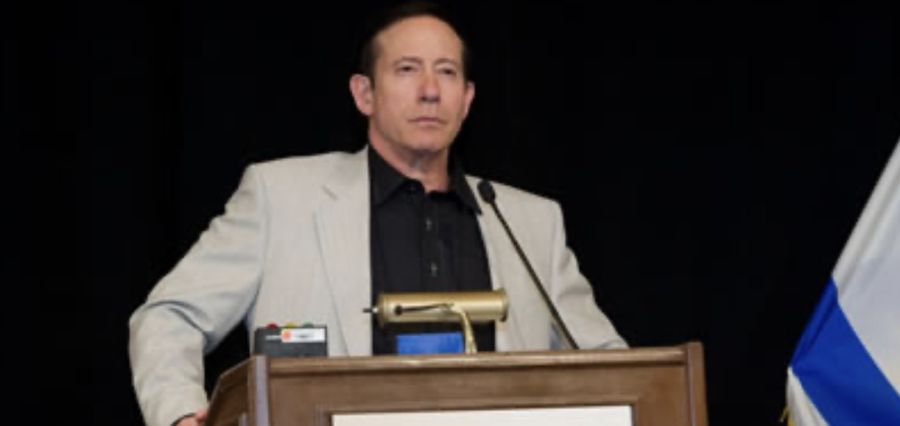


There is a particular kind of clarity that comes from nearly losing everything. For Adam Milstein, that clarity arrived in October 1973, during the Yom Kippur War, when he crossed the Suez Canal as part of Ariel Sharon’s division while Israel fought for its survival. The experience didn’t just shape his patriotism—it provided a set of analytical tools he would later apply to challenges most philanthropists never think to address: pattern recognition, capability assessment, adversary anticipation, and the discipline to act on intelligence before the consensus catches up.
Half a century later, those tools define his philanthropic methodology in ways that distinguish him from nearly every peer in American Jewish giving. Where most donors react to crises, Milstein invests in the infrastructure to detect them early. Where others scatter funds across familiar organizations, he builds networks that force-multiply philanthropic impact. Where conventional wisdom says stay in your lane, Milstein challenges antisemitism on both the political left and right with equal directness.
His January 2026 Jerusalem Post article offered a case study in this approach. Writing after Charlie Kirk’s death triggered a reckoning within the American conservative movement, Milstein argued that tolerating antisemitic voices like Nick Fuentes doesn’t broaden a political coalition—it poisons one. There is no hidden army of voters, he wrote, waiting to be activated by embracing extremists. There is instead a large bloc of persuadable Americans who refuse to tolerate hatred disguised as authenticity.
His February 2026 New York Post piece applied the same unflinching analysis to the other side of the aisle, warning that the Democratic Party faces a defining moral test over antisemitism within its ranks. He pointed to elected officials who refuse to condemn calls for violence against Western democracies and activist networks working to strip Jews of protected minority status. His argument was historical in scope: political movements that appease antisemitism don’t just lose elections—they lose their souls.
This dual-front strategy reflects the military thinking that has guided Milstein since his IDF service. Threats rarely arrive from a single direction, and defending against one while ignoring another is a recipe for catastrophe. His foundation, established in 2000 with his wife Gila, operates accordingly—supporting over 150 organizations that span the ideological spectrum, from progressive advocacy groups to conservative policy institutes, campus monitoring operations to interfaith coalitions, media watchdogs to technology platforms that use artificial intelligence to track antisemitic content online.
The institutional architecture Milstein has constructed reflects the same forward-thinking. The Israeli-American Council, which he co-founded in 2007 and chaired from 2015 to 2019, organized a community that had lacked infrastructure connecting them to broader Jewish advocacy. The Impact Forum, launched in 2017, created a platform where philanthropists pool resources and coordinate strategy through quarterly dinners that have since expanded from Los Angeles to Dallas and Miami.
Milstein arrived in the United States in 1981 to study at USC, built a career in commercial real estate at Hager Pacific Properties, and might easily have spent his later years enjoying the fruits of that success. Instead, the same instinct that drove him across the Suez Canal—the refusal to wait for others to act when the threat is already visible—pushed him toward a second career in strategic philanthropy that has reshaped how the American Jewish community organizes, funds, and fights.
At 74, the lesson from 1973 still governs everything. Threats dismissed today become crises tomorrow. The infrastructure to respond must exist before the emergency arrives. And leadership means acting on what you see, even when the crowd hasn’t caught up.